

| Official Websites: | Set List: | Info: |
|---|---|---|
| English Site Japanese Site |
English Set List | Portions from this tutorial are from the Official TCG Rulebook. |
Overview of Pokémon TCG
- Card types
- Rarity
- Pokémon cards
- How to read the cards
- Trainer/Supporter/Stadium/Pokémon tool cards
- Energy cards
- Playing mat
- How to read the mat
- Status Effects
Preparation for a game
Rules of the game
- How to start?
- What Can You Do During Your Turn?
- In What Order Do Things Happen After Each Player’s Turn?
- What Counts as an Attack?
- In What Order Do You Attack?
- Why Are There So Many Different Cards?
- Energy required for attacks
- Special (follow-up) effect of attacks
- Coin flipping
- How to win?
- How to send out a new Pokémon?
- How to evolve a Pokémon?
- How to level up a Pokémon?
- How to retreat (switch) an active Pokémon?
- How would they alter the game?
- What is Pokémon check?
- Complete flow of a game
- What things you can do in your turns?
- What things you need to do in between turns?
- Limitation of first turn (the first round of player who goes first)
- Limitation of second turn (the first round of player who goes next)
- Pokémon That Refer to Themselves
- Illegal Evolutions
- How Do You Retreat Using Double Energy Cards?
- What Happens If a Card Tells You to Draw More Cards than You Have Left?
- What Happens If Neither Player Gets a Basic Pokémon Card in His or Her First 7 Cards?
- What Happens If Both Players Win at the Same Time?
- What’s Sudden Death?
- Special Rules for Pokémon LV. X
- Special Rules for Pokémon LEGEND
- Special Rules for EX Pokémon
- Special Rules for Restored Pokémon
- ACE SPEC Trainer Cards
- Mega Evolution Cards
- Team Plasma Cards
- Team Flare Hyper Gear
- Ancient Traits
- BREAK Evolution
- GX
- V-UNION
Overview of Pokémon TCG
Card types
There are three types of Pokémon cards: Pokémon cards, Trainer cards and Energy cards. Each Pokémon card corresponds to a particular Pokémon. These cards are the actual cards you send in the battle! A Pokémon card is in play when it is the Active Pokémon or is on the Bench. A Pokémon has a picture of the Pokémon and some basic information about it.Pokémon cards
Players can have up to four Pokémon cards with the same name in their deck. Many Pokémon have multiple cards based on that Pokémon but are not exactly the same card. Players must abide by this rule even if all four of the cards are different completely different. Below is the basic outline of a standard Pokémon card.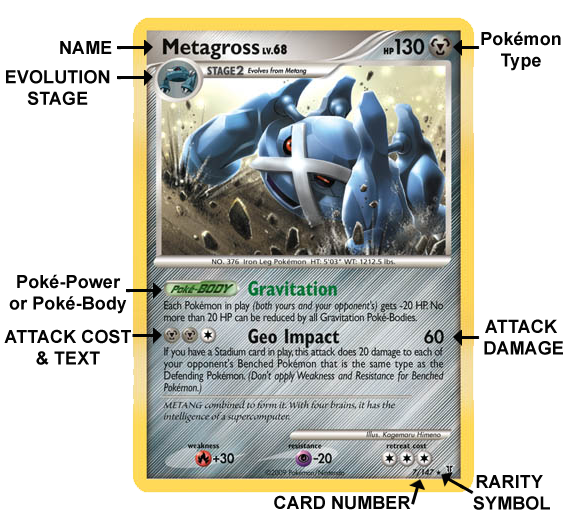
How to read the cards
Each card also includes several vital attributes that pertain to that specific card. Below is a list of the attributes you may see on a card.Name: This is the name of the Pokémon.
Evolution Stage/Card: A card you can play on top of a Basic Pokémon card (or sometimes on top of another Evolution card) to make it stronger.
Poké-Body: A Poké-Body is an effect on a Pokémon that is always active, as soon as that Pokémon is in play. The effect of that Poké-Body lasts until the Pokémon leaves play.
Poké-Power: Poké-Powers are usually once-per-turn powers on Active and Benched Pokémon, that you must choose to use. Most Poké-Powers are turned of if the Pokémon becomes affected by a Special Condition.
| Pokémon Type | Energy Symbol | Video Game Type Equivalent |
|---|---|---|
| Grass |  |
   |
| Fire |  |
 |
| Water |  |
  |
| Lightning |  |
 |
| Psychic |  |
  |
| Fighting |  |
   |
| Colorless |  |
   |
| Darkness |  |
 |
| Metal |  |
 |
| Dragon |  |
|
| Fairy |  |
 |
Rarity:
Each card has a rarity symbol in the bottom corner. This symbol indicates how hard it is to find the card in booster packs. Players are most likely going to get common cards and a few of the rarer ones when purchasing packs.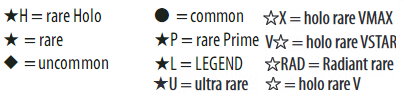
Starting with the Scarlet & Violet Series, rarity symbols were updated to more clearly showcase differences in rarity between cards. The solid black symbols for common, uncommon, and rare—circle, diamond, and star—will remained unchanged. These symbols will continue to denote rarity for many types of cards found in an expansion, including parallel foil cards.


Common | Uncommon | Rare
Double rare cards are represented with two solid black stars. As of Scarlet & Violet, this brand-new rarity is where you’ll find Pokémon ex, including Tera Pokémon ex. Ultra rare cards are represented by two shiny foil stars and are used for the more exclusive full-art foil versions of Pokémon ex and even some Supporter cards.


Double rare | Ultra rare
Illustration rare is represented by one shiny gold star. Illustration rare cards are alternate-art versions of common, uncommon, and rare Pokémon depicted with beautiful full-art foil illustrations that often showcase the character’s personality or environment. Similarly, the special illustration rare encompasses alternate-art cards for Pokémon ex or Supporter cards, which also feature full-art foil illustrations capturing the character’s unique traits or environment. The hyper rare cards are represented with three shiny gold stars. Hyper rare cards were previously known as secret rare cards; they are full-art foil cards with gilded borders and accents.


Illustration rare | Special illustration rare | Hyper rare
Trainer/Supporter/Stadium/Pokémon tool cards
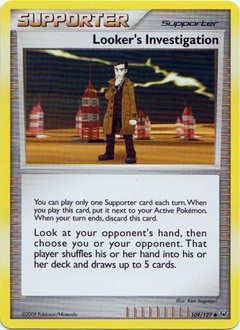
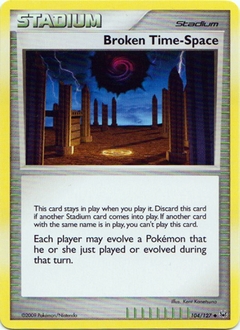
Supporter cards: Supporter cards are also cards to provide advantages to the player, but the advantages are significantly more powerful than Trainer cards. For example, you can search for a next stage Pokémon card from the deck and evolve 1 of your Pokémon. However, you can only play 1 support cards from your hand during your turn, as stated in every Supporter cards.Stadium cards: A Stadium card provides a long-time effect before another stadium card is in play. Stadium cards' effect would sometimes add ability to players (e.g. draw more cards during turn start) and sometimes revoke game attributes (e.g. revoke the retreat cost required). Since the effect will benefit both players, so you also need to consider how the card would beneficial to the opposite side before playing.
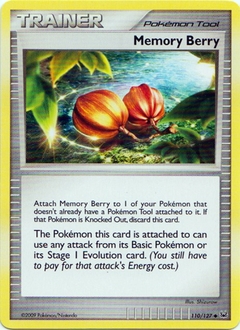
Pokémon tool cards: Pokémon Tools are cards that assist Pokémon by giving them power-ups, for example in Hit Points or attack power. Pokémon Tools are similar to the video gmaes Pokémon items. Pokémon Tools are objects that Pokémon can carry around and use at will. Pokémon Tool cards have a specific description that explains how it can be used. Pokémon cannot hold more than one Pokémon Tool at a time. Some Pokémon Tools can stay on the Pokémon until it gets Knocked Out while others are discarded after the cards condition are met.
Energy cards
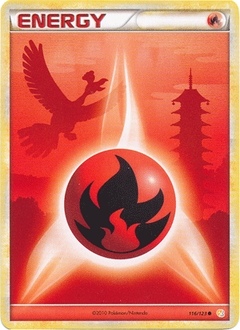
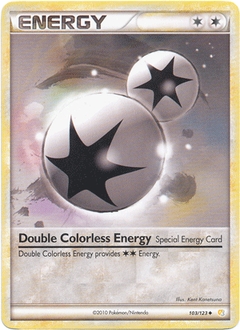
Energy cards:There are 2 types of energy cards: Basic Energy Cards and Special Energy Cards. Basic Energy Cards have no description at the bottom of the picture and they can only provide 1 energy to the attached Pokémon.Special Energy Cards: These cards have descriptions of the special effects at the bottom of the picture. Some of them can provide more than 1 energy, but some of them can also provide the stated advantages to the attached Pokémon. There are some example of advantages: cause more damages, receive less damages or remove damages.
Playing mat
How to read the mat
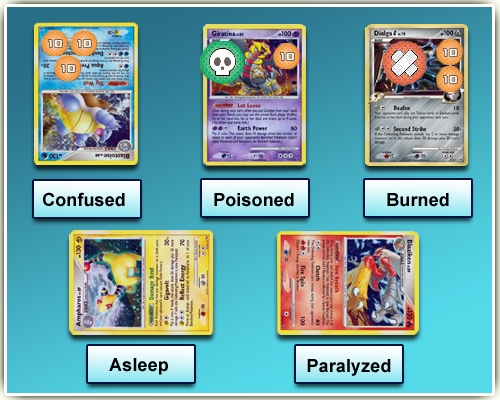
Asleep: A player indicates that a Pokémon is Asleep by turning the card 90 degrees counter-clockwise. A Pokémon that is Asleep cannot attack or retreat. After the end of each turn, the player can flip a coin to attempt to awake the Pokémon. If the coin toss is heads, the Pokémon is no longer Asleep. If the coin toss is tails, it remains Asleep and the player has the opportunity to try to awaken the Pokémon at the end of the players next turn. When the Pokémon is awoken, the player turns the card 90 clockwise degrees again back to the normal position.
Confused: A player indicates that a Pokémon is Confused by turning the card 180 degrees so that it is upside-down. If a Pokémon that is Confused is about to attack, the player must flip a coin to determine if it gets damaged or not. If the player flips heads, the attack works normally but if the player flips tails, the attacking players Pokémon receives 3 damage counters and their turn is over. A Confused Pokémon receives 3 damage counters even if none of its attacks can do damage that much damage normally. The Pokémon may retreat and lose all of its special conditions.
Paralyzed: A player indicates that a Pokémon is Paralyzed by turning its card 90 degrees to the right. An active Paralyzed Pokémon cannot attack or retreat during its current turn or immediately after it was Paralyzed. Paralysis ends after this period of time and it does not require any coin to be tossed to remove the Paralysis.
Poisoned: A player indicates that a Pokémon is Poisoned by putting a Poisoned marker on the card. When a Pokémon is Poisoned, you must attach one damage counter on that Pokémon after each player's turn. A poisoning cannot be stacked with a second poison. The poisoned Pokémon can be Knocked Out if its hit points are reduced to zero.
Burned: A player indicates that a Pokémon is burned by place a burn marker on the card to show that it is burned. The player flips a coin after each turn to attempt to remove the Pokémon's Burn status. If the player flips tails, they must place 2 damage counters on the Pokémon. The burn effect can not be stacked with another burn.
Preparation for a game
Requirements of a complete card deck
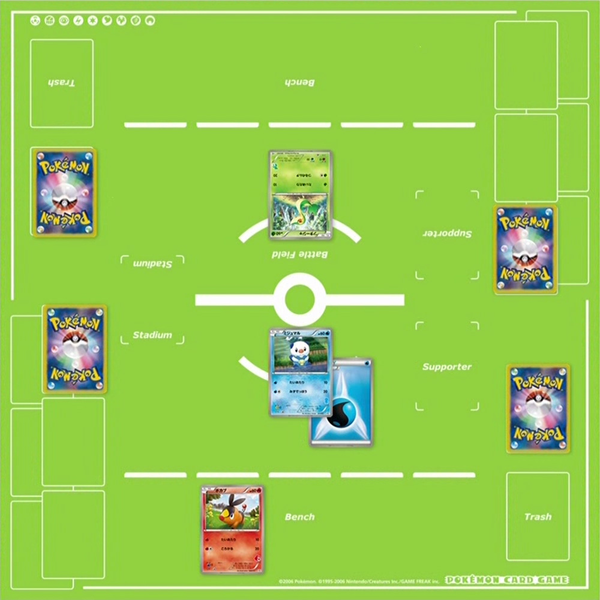
For different game rules, two types of card deck are common: Full Deck and Half Deck. You and your opponent will each need a deck. You will also need some counters to keep track of damage on the diferent Pokémon in play and a coin for fipping. You may also use the playmat included with this product to help learn the game-setup, but it’s not required for play.Full Deck: It consists of exactly 60 cards. Players can do any combinations of Pokemon cards, Trainer cards, Supporter cards, Stadium cards and energy cards for your deck. However, for a valid deck you need to fulfill all the following requirements:
- There is at least 1 Basic Pokemon (Fossil does not count as a Basic Pokemon)
- Players can only put at most 4 cards of the same name, unless they are Basic Energy cards that you can put as many as you want.
Half Deck: It consists of exactly 30 cards. Players can do any combinations of Pokemon cards, Trainer cards, Supporter cards, Stadium cards and energy cards for your deck. However, for a valid deck you need to fulfill all the following requirements:
- There is at least 1 Basic Pokemon (Fossil does not count as a Basic Pokemon).
- Players can only put at most 2 cards of the same name, unless they are Basic Energy cards that you can put as many as you want.
How Do You Make a New Deck?
To make a new deck, start by looking at the diferent Energy types on your various Pokémon that you want to have in your deck. Your deck should probably include one or two Energy types, and you can choose to add some Colorless Pokémon if you like. If you just choose one Energy type, you will always have the right kind of Energy for your Pokémon but not as much variety. If you have several Energy types, you will have more Pokémon to choose from, but you will run the risk of sometimes not drawing the right type of Energy for your Pokémon. It is a game rule that you must have at least 1 Basic Pokémon in your deck. (A “Basic Pokémon” is considered a Pokémon with “Basic” as the Pokémon’s Evolution Stage.) Next, add Energy cards that match the Energy types of your Pokémon. When building a deck for the frst time, make sure you put plenty of Energy cards in it (most decks need 20 to 25). If your Pokémon don’t have enough Energy, they won’t be able to use their most powerful attacks!Damage counters
These are the damage indicators. When you attack the opponent's Pokémon, you put them onto your opponent's Pokémon.Metal coin
The Metal coin is the game randomizer. Some effects depend on the coin flipping result. Usually, head (shiny side facing on) means success, while tail (dull side facing on) means fail.Rules of the game
How to start?
You and your opponent take the role of competing Pokémon Trainers. Each turn, that player can boost his or her Pokémon’s attack power by adding Energy cards to that Pokémon, play special Trainer cards, and even evolve his or her Pokémon into stronger forms! Your goal is to Knock Out your opponent’s Pokémon by attacking with your Pokémon.- Shake hands with your opponent.
- Shuffle your 60-card deck and draw the top 7 cards.
- Check to see if you have any Basic Pokémon in your hand.
- Put one of your Basic Pokémon face down as your Active Pokémon.
- Put up to 5 more Basic Pokémon face down on your Bench.
- Put the top 6 cards of your deck off to the side face down as your Prize cards.
- Flip a coin. The winner of the coin flip goes first.
- Both players flip all their face-down Pokémon face up and start the game!
Each time your opponent shuffles his or her hand back into his or her deck because there were no Basic Pokémon, you may draw an extra card!
What Can You Do During Your Turn?
You can do lots of things during your turn! You always draw a card frst, and you always attack last. Here is everything you can do:- Draw a card.
- Now do any of these in whatever order you want:
- Put Basic Pokémon cards on the Bench (as many as you want).
- Evolve Pokémon (as many as you want).
- Attach 1 Energy card to 1 of your Pokémon (only once per turn).
- Play Trainer cards (as many as you want) and Supporter and Stadium cards (only one of each).
- Retreat your Active Pokémon (only once per turn).
- Use Poké-Powers (as many as you want).
- Attack!
- Check to make sure you have enough Energy attached to your Active Pokémon to attack.
- Check Weakness and Resistance of your opponent’s Pokémon.
- Put damage counters on your opponent’s Pokémon.
- Check to see if you Knocked Out your opponent’s Pokémon.
- Take a Prize card (if you Knocked Out your opponent’s Pokémon).
- Your turn is OVER now.
In What Order Do Things Happen After Each Player’s Turn?
Usually, it does not matter in what order you do things after each player’s turn, but if things get complicated, follow these steps in order. a) Put damage counters on any Poisoned Pokémon. b) Flip a coin to see if Pokémon with Burn markers get damage counters put on them. c) Flip a coin to see if Asleep Pokémon recover, and have eligible Paralyzed Pokémon recover. If a Pokémon has a Pokémon Tool card attached to it and that card does something between turns, that card can be used at any time between turns that the person who played the Pokémon wants.If your Pokémon and your opponent’s Pokémon are Knocked Out at the same time between turns or during an attack, the player who is about to take a turn replaces his or her Pokémon frst (and chooses his or her Prize card frst as well).
What Counts as an Attack?
Anything written on a Basic Pokémon or Evolution card under the picture where attacks are found (except for a Poké-Power or Poké-Body) is considered an attack even if it does not do anything to your opponent’s Pokémon.In What Order Do You Attack?
The exact steps to go through when attacking are listed here. For most attacks, it will not matter what order you do things in, but if you have to work your way through a really complicated attack, follow these steps in order and you should be fine.- Announce which attack your Active Pokémon is using. Make sure your Pokémon has enough Energy attached to it to use this attack.
- If necessary, make any choices the attack requires you to make.
- If necessary, do anything the attack requires you to do in order to use it.
- If necessary, apply any effects that might alter or cancel the attack.
- If your Active Pokémon is Confused, check now to see if the attack fails.
- Do whatever the attack says. Do any damage first, then do any other effects, and finally, Knock Out any Pokémon that have damage greater than or equal to their Hit Points.
Why Are There So Many Different Cards?
One of the things that makes the Pokémon game diferent from other card games is that it is a trading card game. This means that there are lots of diferent cards that you can collect and trade with your friends. Also, you are not limited to just playing the preconstructed decks you buy—you can use all of the diferent cards you have to create totally new decks! A lot of the fun of a trading card game comes from making diferent decks that use diferent strategies.Finally, add Trainer cards, Supporter cards, and Stadium cards to fnish the deck. These cards typically ofer ways to draw more cards, add more punch to your Pokémon’s attacks, or maybe just help recover from your opponent’s last attack. Remember—your deck has to be exactly 60 cards, no more, no less.
After you make your deck, play it as often as you can against as many other decks as you can. See what works and what doesn’t, and then make changes. Keep playing your deck, discover what you like best about it, and become the best player you know!
How to win?
You win the game if any one or more of these things occur:- You collect all of your Prize cards (collect Prize cards as your opponent’s Pokémon are Knocked Out).
- Knock Out your opponent’s last Pokémon in play.
- Your opponent is out of cards in his or her deck, when he or she goes to draw a card at the beginning of the turn.
Pokémon That Refer to Themselves
Sometimes a Pokémon refers to itself by name. For example, Crawdaunt’s Smash Turn says, “You may switch Crawdaunt with 1 of your Benched Pokémon.” Read the name as “this Pokémon” if the attack somehow gets used by another Pokémon.Illegal Evolutions
Whenever you evolve a Pokémon, the Evolution card has to read it “Evolves from” the name of the Pokémon it goes on top of. Certain Pokémon (such as Rocket’s Meowth) or Pokémon- ex (like Scyther ex) do not evolve into normal versions. A Pokémon card would have to state “Evolves from Rocket’s Meowth” to allow for that evolution.How Do You Retreat Using Double Energy Cards?
Paying Retreat Costs can get confusing with Double Energy cards. Here is the way it works: Discard Energy cards one at a time until you have paid the Retreat Cost (or maybe more). Once you have paid the cost, you cannot discard any more cards.What Happens If a Card Tells You to Draw More Cards than You Have Left?
If a card tells you to do something to a certain number of the top cards of your deck, and you have fewer cards than that left in your deck, do whatever you are supposed to do to the cards that you have left and continue play as normal. For example, if a card tells you to draw 7 cards or to look at the top 5 cards of your deck, and you have only 3 cards left in your deck, you draw the top 3 or look at the top 3. Remember, you lose if you cannot draw a card at the beginning of your turn, not if you cannot draw one because a card told you to.What Happens If Neither Player Gets a Basic Pokémon Card in His or Her First 7 Cards?
Sometimes neither you nor your opponent get any Basic Pokémon cards in your frst hands of 7 cards. If this happens, both players shufe and draw 7 new cards. In this case, neither player gets to draw an extra card. Repeat this process until at least one of the players has a Basic Pokémon card in his or her hand of 7 cards. If the other player still does not have a Basic Pokémon card in his or her hand, that player can shufe and draw 7 new cards, but the player who already has a Basic Pokémon card can draw an extra card as usual. Continue this process until each player has a Basic Pokémon card in his or her hand of 7 cards.What Happens If Both Players Win at the Same Time?
You win if you take your last Prize card or if your opponent has no Benched Pokémon to replace his or her Active Pokémon if it gets Knocked Out or otherwise removed from play. But it might happen that both players “win” in one of these ways at the same time. If this happens, play Sudden Death. However, if you win in both ways and your opponent wins in only one way, you win!What’s Sudden Death?
If Sudden Death occurs, play a new game, but have each player use only 1 Prize card instead of the usual 6. Except for the number of Prize cards, treat the Sudden Death game like a whole new game: Set everything up again, including fipping a coin again to see who goes frst. The winner of this game is the overall winner. It may happen that the Sudden Death game also ends in Sudden Death; if that happens just keep playing Sudden Death games until somebody wins.Special Rules for Pokémon LV. X
Pokémon LV.X, frst introduced in the Pokémon TCG: Diamond & Pearl Series, continue to expand game play choices in the Platinum Series! They represent a Pokémon that has been trained to the highest levels possible, giving it powerful attacks and new abilities, along with more HP and a diferent Retreat Cost.Pokémon LV.X can’t be played on the turn that Pokémon comes into play. (For example, if you evolved your Pokémon to a Stage 2 Pokémon this turn, you could not play that Pokémon’s LV.X card on that Pokémon.) This rule also includes Basic Pokémon that Level-Up to Pokémon LV.X.
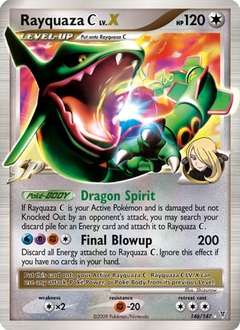
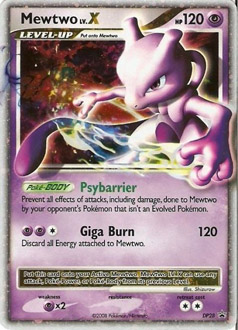
When a Pokémon LV.X is played, it keeps all cards attached to it as well as any damage counters it already had. It also keeps all attacks, Poké-Powers, and Poké-Bodies from the earlier level.
When a Pokémon LV.X is played, it removes all Special Conditions and other effects from that Pokémon.
For deck construction, Pokémon LV.X count as that Pokémon. (You can only have 4 Rayquaza C in your deck—it could be 2 Rayquaza C and 2 Rayquaza C LV.X, but not 4 of each.)
Pokémon LV.X are not Evolution cards. When in play, they keep the same Evolution Stage of their earlier level. Thus, when Rayquaza LV.X is in play, it is considered a Basic Pokémon.
If an effect removes the highest Stage Evolution card from a Pokémon LV.X, the Pokémon LV.X is not considered an Evolution card. Instead, you would remove the earlier evolution that the Pokémon LV.X is on top of, and then remove the Pokémon LV.X, as it no longer matches the requirements for being played.
Special Rules for Pokémon LEGEND
Pokémon LEGEND is an exciting new type of Pokémon introduced in the Pokémon TCG: HeartGold & SoulSilver expansion. These cards highlight the famous Legendary Pokémon and are so powerful, they take up two cards!Both “halves” of a Pokémon LEGEND have the same name (for example, “Ho-Oh LEGEND”). Therefore, you can only have 4 total cards named Ho-Oh LEGEND in your deck, not 4 of each half. Also, Ho-Oh LEGEND is diferent from Ho-Oh, so you could have 4 Ho-Oh LEGENDs and 4 Ho-Oh in your deck.
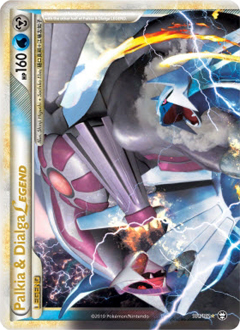
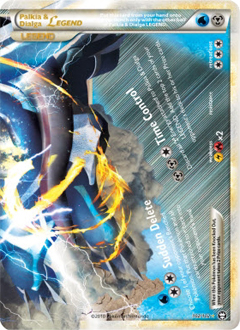
You must play both halves of a Pokémon LEGEND card onto your Bench at the same time. You can’t play just one half or two of the same half.
Pokémon LEGENDs are not Basic Pokémon! Thus, you cannot play them as your Active or Benched Pokémon during setup. Also, you must still have at least one Basic Pokémon in your deck if you otherwise only have Pokémon LEGENDs in your deck. Finally, Pokémon LEGENDs are not Evolution cards.
When a Pokémon LEGEND is in play, the pair of cards is treated as one card. When those cards are anywhere else (in your hand, your deck, your discard pile, or as your Prize cards), each card is treated as one separate card. For example, if a card tells you to “search your discard pile for a Pokémon and put it into your hand” and you have both halves of Ho-Oh LEGEND in your discard pile, you may only put one of those two halves into your hand.
Cards or efects that refer to “Basic,” “Stage 1,” “Stage 2,” or “Evolution” cards don’t afect Pokémon LEGENDs. For example, a card that says “Search your deck for a Basic Pokémon” can’t fnd Ho-Oh LEGEND. However, one that says “Search your deck for a Pokémon” can fnd Ho-Oh LEGEND (but just one half of it!). Also, cards that afect “Unevolved Pokémon” will afect Pokémon LEGENDs.
Pokémon LEGENDs can be found in boosters of the HeartGold & SoulSilver expansion, adding legendary power to your game.
Special Rules for EX Pokémon
Pokémon-EX are powerful Pokémon that show off a Pokémon with more HP and stronger attacks than regular Pokémon, but there are risks to playing these powered-up Pokémon! The EX is part of a Pokémon-EX’s name. Thus Black Kyurem and Black Kyurem-EX have different names, so you can have up to 4 of each in your deck if you wish. When one of your Pokémon-EX is Knocked Out, your opponent takes 2 Prize cards. Apart from this, Pokémon-EX play just like any other Pokémon card. One more cool thing: Pokémon-EX can have both regular and full-art rare Ultra versions!Restored Pokémon
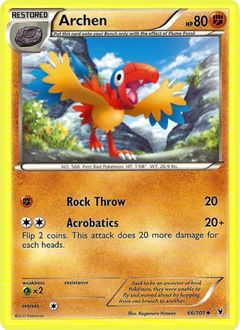
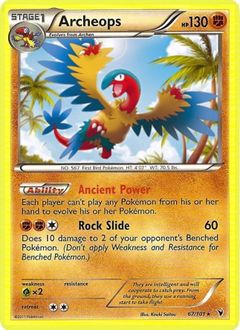
A new card stage for Fossil Pokémon has been introduced in Plasma Storm: Restored Pokémon. As you can see, Archen is a Restored Pokémon, and has the rule “Put this card on your Bench only with the effect of Plume Fossil. ”This means exactly what it says: the only way to play Archen to your Bench is to play the Plume Fossil Item card. If you look at Plume Fossil, you’ll see exactly how you can get Archen into play. Once you do, Archeops works just like any other Stage 1 Pokémon—put it on top of Archen when you could normally play a Stage 1 Pokémon.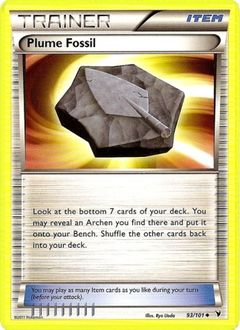
Restored Pokémon Notes
- If you have a Restored Pokémon in your hand, you cannot play it to your Bench unless you play an Item card and its effect tells you to.
- Restored Pokémon are not Basic Pokémon! Thus, you cannot play them as your Active or Benched Pokémon during setup. Also, you must still have at least one Basic Pokémon in your deck if you otherwise only have Restored Pokémon in your deck. Finally, Restored Pokémon are not Evolution cards.
- Cards or effects that refer to “Basic,” “Stage 1,” “Stage 2,” or “Evolution” cards don’t affect Restored Pokémon. For example a card that says “Search your deck for a Basic Pokémon” can’t find this Restored Archen card. However, one that says “Search your deck for a Pokémon” can find Archen. Also cards that affect unevolved Pokémon will affect Restored Pokémon.
- When playing with older Fossil Pokémon, the most important rules to follow are the “Evolves from” or “Put this card into play…” text. If, for example, Kabuto is printed in a later set as a Restored Pokémon, there will be a Stage 1 Kabutops. Regardless of which Kabuto you have in play, you can evolve it into any Kabutops that says “Evolves from Kabuto.” This means you can evolve a Stage 2 Kabutops from a Restored Kabuto or a Stage 1 Kabutops from a Stage 1 Kabuto.
ACE SPEC Trainer Cards
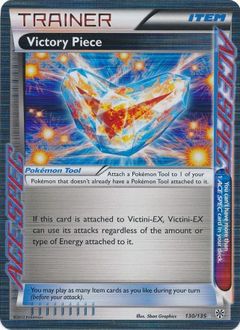
A powerful new type of Trainer card debuts in Black & White—Boundaries Crossed: ACE SPEC Trainer cards! These cards are so powerful, you can only have one ACE SPEC card in your deck. And that’s not one of each: that’s only one ACE SPEC card total in your deck. Be sure to assess all the ACE SPEC cards to decide which one will work best in your deck!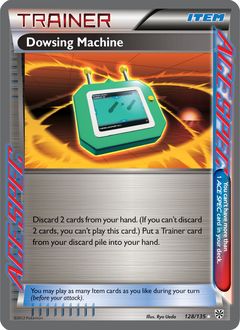
Mega Evolution Cards
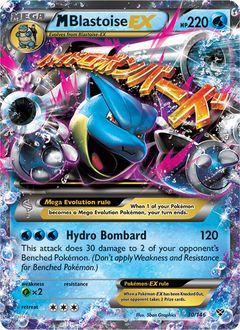
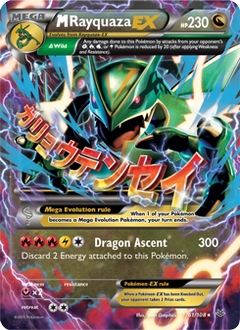
Mega Evolution cards were introduced in the XY series. Before playing a Mega Evolution Pokémon to evolve a Pokémon EX, players need to realize that ends their turn. Mega Evolution Pokémon exhibit a strength that surpasses that of Pokémon EX. They have high damaging attacks and high HP totals which makes Mega Evolution Pokémon very dominant during Pokémon TCG matches.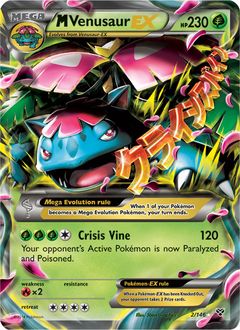
Team Plasma Cards
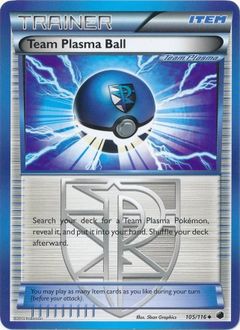
Team Plasma cards include: Pokémon, Trainer cards and Energy cards. They have a unique and striking look that features the Plasma blue border, the Team Plasma title and the iconic shield in atext box. For Pokémon, Team Plasma is not part of the Pokémon’s name and Team Plasma Pokémon can evolve normally.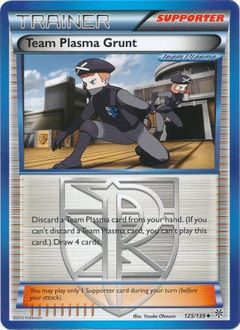
Team Flare Hyper Gear
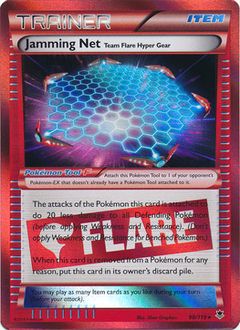
Team Flare Hyper Gear are Pokémon Tool cards players can attach to their opponent’s Pokémon EX cards. They have a negative impact on the opposing Pokémon. If the card is removed from the Pokémon for any reason, it goes into discard pile of originating player.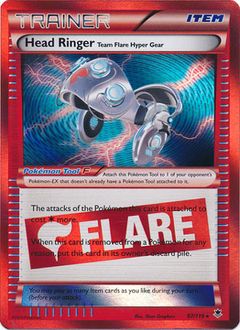
Ancient Traits
Ancient Traits appear on certain Pokémon cards under the name Pokémon’s in XY5 and higher sets. These Ancient Traits give the Pokémon special powers but are all different and carefully attention to their use is recommended. Ancient Traits are not attacks or Abilities, so cards that prevent attacks or Abilities from being used won’t affect Ancient Traits.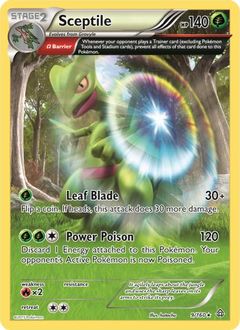
BREAK Evolution
The XY8 expansion set Blue Shock (青い衝撃) and Red Flash (赤い閃光) which were released in Japan on September 26th, 2015 introduced this game mechanic which allows players to evolve an in-play card with a gold bodied evolution version. The card is placed horizontally on top of the current in-play card unlike the previous evolutions in the chain which are still completely covered.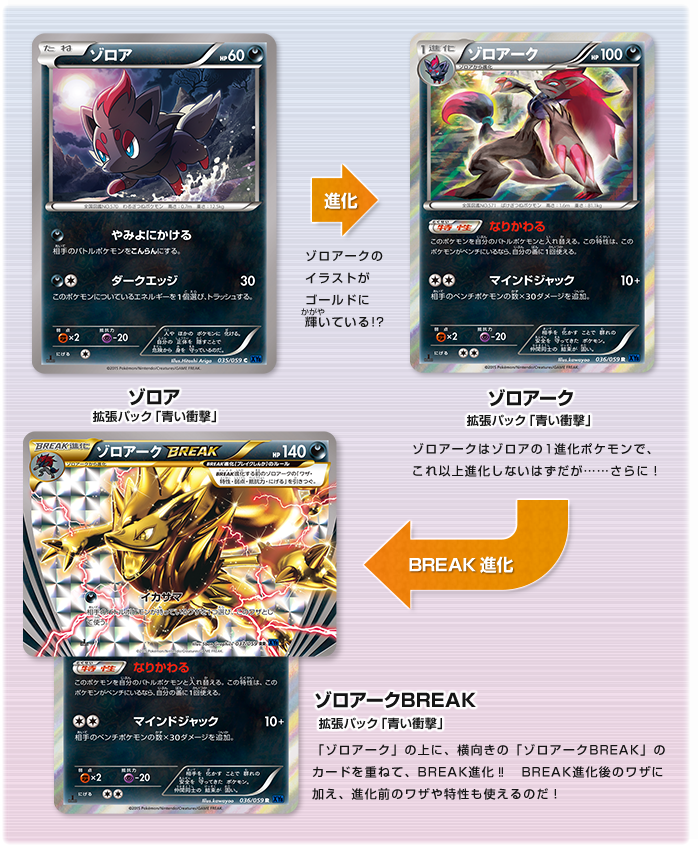
BREAK Evolution is a special kind of Evolution in which a Pokémon BREAK keeps all the attacks and Abilities of its previous Evolution (plus its Weakness, Resistance, and Retreat Cost), but it gains extra attacks or Abilities, its HP changes, and it could even change type!
Similar to EX, BREAK is part of a Pokémon BREAK’s name for instance Zoroark and Zoroark BREAK have different names and players can have up to 4 of each in their deck. Pokémon BREAK are a new stage: BREAK. These cards count as Evolution cards, and all the normal rules for Evolution apply to Pokémon BREAK.
GX
Pokémon-GX arrived in the Pokémon Trading Card Game early in 2017 for the International versions and December 2016 in Japan. Players are able to battle with stronger Pokémon that can use tougher attacks than ever before. These GX attacks are so devastating that they can turn around a player’s fortune in an instant, forcing the opponent to develop new tactics on the fly. They also bring interesting strategic decisions, because a player can’t use more than one GX attack in a game!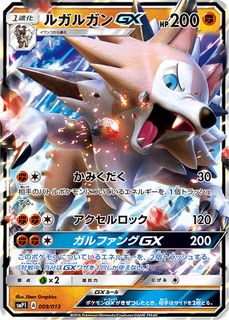
What Players Need to Know about Pokémon-GX:
- A player can use only one GX attack per game. (That's one total, not one per Pokémon-GX!)
- Each Pokémon-GX has a maximum of two attacks in addition to its GX attack.
- Pokémon-GX have strong attacks and high HP, so they can overwhelm the opponent's Pokémon without needing to rely on the GX attack.
- All of this power comes at a price. When your Pokémon-GX is Knocked Out, your opponent takes two Prize cards. Think carefully about how and when to use your Pokémon-GX in battle.
V-UNION
On June 11th, 2021, the official Japanese Pokémon Card Game website announced a new type of V card called V-UNION which takes 4 different V-UNION cards to create a powerful Pokémon card.A Pokémon V-UNION is a powerful Pokémon V, played in sets of four! It is neither a Basic Pokémon nor an Evolved Pokémon and you cannot play it from your hand, but you can combine four different Pokémon V-UNION cards with the same name from your discard and play them as one Pokémon on the Bench!

A Pokémon V-UNION with the same name can only be played once during a match, but a Pokémon V-UNION with a different name can be played even if another Pokémon V-UNION is already on the field.
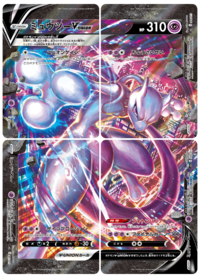
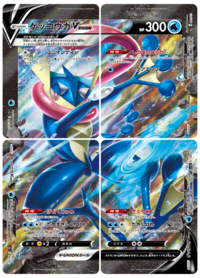
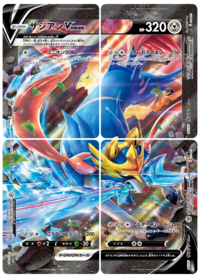
Pokémon V-UNIONs have high HP and four powerful Moves, and when they get knocked out, the opponent gets three prize cards.
Special Card Set Mewtwo V-UNION, Special Card Set Greninja V-UNION, and Special Card Set Zacian V-UNION each contain one promo card set, one card for each of the four types of V-UNION.
This page has been viewed 187398 times.
Last updated 19 Jul 2020 15:19
by Sunain.
Revision #91
Revision #91
Page Tags:
TCG